
SIMILARITIES BETWEEN KABYLIE, THE MEDITERRANEAN ISLANDS, AND SOUTHERN ITALY (CALABRIA): AN EXPLANATION
Many Kabyles, when visiting Mediterranean islands like Sicily, Malta, or Sardinia, and even certain regions of Italy, are struck by the striking similarities with Kabylie: mountainous landscapes plunging into the sea, perched villages, Mediterranean vegetation, olive trees, rugged terrain, and sometimes even an atmosphere that is hard to describe, yet strangely familiar.
This feeling is generally attributed to geographic proximity and a shared Mediterranean climate. However, an even more surprising explanation exists: according to geologists, Kabylie broke away from an ancient continental block linked to Europe tens of millions of years ago, long before the appearance of present-day peoples and even before the formation of the Mediterranean as we know it today.
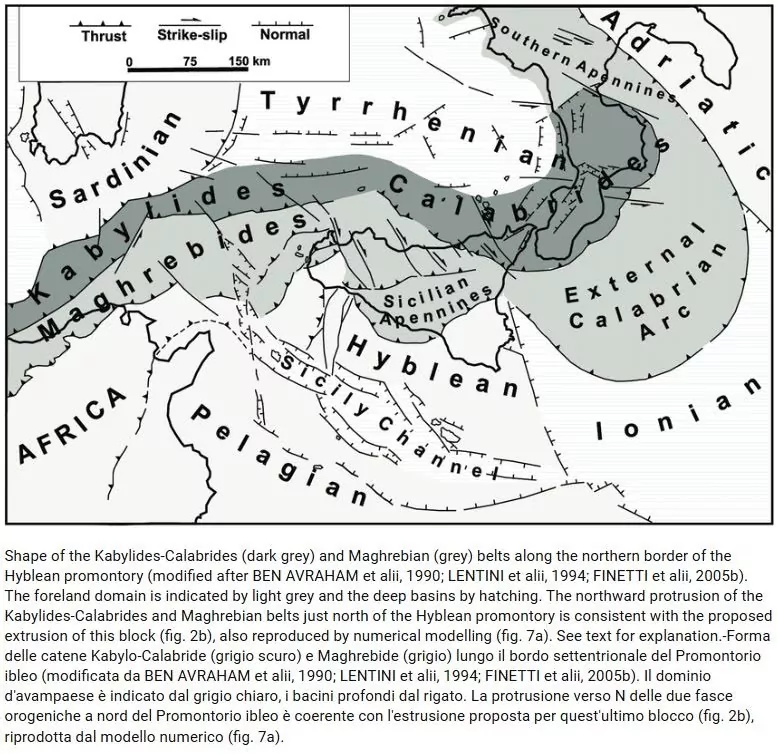
Kabylian massifs indeed share numerous geological affinities with certain regions of southern Europe, notably Calabria in Italy. This relationship is such that specialists speak of a “Kabylian-Calabrian” geological assemblage.
Geologists use the term ALCAPEKA to designate this set of microplates or crustal blocks that shared a common geological history before the major tectonic movements that shaped the western Mediterranean.
ALCAPEKA is an acronym formed from:
AL = Alboran (southern Spain and northern Morocco)
CA = Calabria
PE = Peloritani (northeastern Sicily)
KA = Kabylie
During the opening of the western Mediterranean, between roughly 30 and 15 million years ago, this assemblage fragmented and dispersed. Kabylie then migrated to its current position in northern Algeria.
It is fascinating to think that this feeling of familiarity experienced by so many Kabyle travelers might find part of its explanation in a history much older than that of civilizations: the history of mountains, continents, and tectonic plates.
Karim Achab